Dedicated to the upward economic mobility of Black girls.
Our mission: Ensuring equitable economic outcomes in the digital economy.
Wealth in America did not fall from the sky. It was built, much of it on the stolen labor of enslaved Black people.
Every time Black families built wealth of their own, it was too often burned, seized or legislated away.
The result is a generation of Black girls with no wealth to inherit. Without wealth transfer, every setback becomes a crisis: one emergency, one predatory loan, one missed opportunity. Black girls carry that risk first and longest. Without capital or financial knowledge, they become targets for predatory lending and high-cost debt, and others write their economic future for them.
As the digital economy advances, that gap will widen unless someone intervenes early. Black Girls Wealth is that intervention.
Black girls start at the bottom, and philanthropy is not reaching them.
No wealth to inherit. Mobility that has stalled. Health and reading outcomes that hold girls back before they reach a paycheck. And a philanthropic sector that dedicates almost nothing to them, and does not even count what it gives.
The typical white family holds about nine times the wealth of the typical Black family: $332,100 against $36,800.
Federal Reserve Board, 2025 Survey of Consumer FinancesMedian Black family wealth fell by a quarter between 2022 and 2025, after inflation, while median white family wealth rose.
Federal Reserve Board, 2025 Survey of Consumer FinancesThe bottom half of American households hold 2.3% of the nation's net worth.
Federal Reserve Board, Distributional Financial Accounts, Q2 2026About one in 10 Black families receives any inheritance, against one in three white families. Nine in 10 Black families inherit nothing.
Federal Reserve Bank of Boston, 2023Miami's rank among 381 U.S. metro areas for children's ability to move up from the bottom of the economic ladder. Atlanta ranked 360.
Federal Reserve Bank of Atlanta, 2018 Annual Report (Opportunity Atlas data)Obesity prevalence among non-Hispanic Black girls, the highest of any group of girls in the United States. Health is connected to wealth.
CDC, NHANES 2017–March 2020Share of Black fourth graders reading at or above proficient. Literacy is the gateway to financial knowledge.
NAEP 2024, via The Education TrustOf every $100 foundations gave in 2017, less than 3 cents was specified for Black women and girls combined: under $15 million of $66.9 billion.
Ms. Foundation for Women, Pocket Change data brief and release (2020)How much smaller the unrestricted net assets of Black-led nonprofits were than those of white-led nonprofits at a similar stage. Revenues were 24% smaller.
Echoing Green and The Bridgespan Group, 2020Median size of foundation grants benefiting Black women and girls in 2017, about half the $35,000 median for all foundation grants. Only 22% of organizations serving Black women and girls receive foundation funding.
Ms. Foundation for Women, Pocket Change (2020)Philanthropy must change this. As wealth moves into the digital economy, funders who are serious about equity must make a dedicated investment in Black girls. It must start early.
One foundation, built together.
Economic outcomes don't happen in isolation. A child's health, literacy and financial understanding are connected, so we teach them together.
Health
What we eat shapes how we think, focus and learn. Ultra-processed food undermines both health and potential, so wellness comes first.
Reading
Literacy is the gateway to every other kind of knowledge, including financial knowledge.
Economics
How the economy actually works, starting with what the Federal Reserve is and why it matters to every household.
Early investing
The principles of investing and capital markets: why starting young builds wealth, and how money grows over time.
Partnerships
Bankers and financial professionals lead sessions with our girls and invest in the programs that serve them.
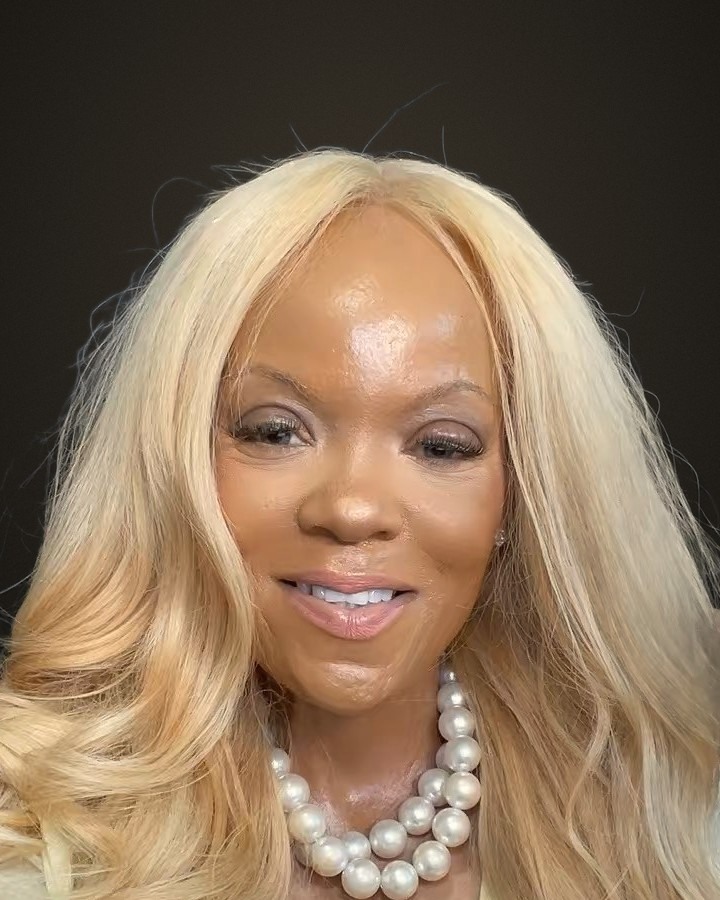
Sunday Phillips
I built Black Girls Wealth with my own resources, because I couldn't wait for permission. In years of building, BGW has received almost no outside funding. That isn't unusual. It's the pattern: in 2017, less than 3 cents of every $100 in foundation giving was specified for Black women and girls.
Black girls cannot afford for this pattern to continue into the digital economy. That's why I started, and that's why I'm asking you to join me.
Sunday Phillips, Founder
Capital is the intervention.
BGW's programs are rooted in closing the racial wealth gap and are open to all students. Participants gain early exposure to investing, economics, health and literacy, the foundation for upward mobility.
Banks and financial institutions: Partner with BGW to bring hands-on financial education into classrooms. Our programs give your team a direct, measurable way to invest in the communities you serve.